We have compiled a list of manufacturers, distributors, product information, reference prices, and rankings for Solid Electrolyte.
ipros is IPROS GMS IPROS One of the largest technical database sites in Japan that collects information on.

Solid Electrolyte - List of Manufacturers, Suppliers, Companies and Products | IPROS GMS

Solid Electrolyte Product List

1~4 item / All 4 items

Displayed results

Solid electrolyte (developed product)

Three-dimensional molded products are possible! Developed using the powder pressing technology of Niwashow Serum!

"Solid electrolytes" are ceramic materials that possess oxygen ion conductivity. They have been developed using the powder pressing technology of Niwashō Ceramics. Applications in small fuel cells and other areas are anticipated. The base material, yttria-stabilized zirconia, is a highly reliable material in terms of strength and reduction resistance, and it allows for three-dimensional shaping. [Features] - Developed using the powder pressing technology of Niwashō Ceramics - Applications in small fuel cells and other areas are anticipated - Possesses oxygen ion conductivity - The base material, yttria-stabilized zirconia, is highly reliable in terms of strength and reduction resistance *For more details, please refer to the PDF document or feel free to contact us.

  • Ceramics
  • others
  • Solid Electrolyte

Added to bookmarks

Bookmarks list

Bookmark has been removed

Bookmarks list

You can't add any more bookmarks

By registering as a member, you can increase the number of bookmarks you can save and organize them with labels.

Free membership registration

Tohoku University Technology: Solid Electrolyte: T07-229

The electrical conductivity of LiBH4 at room temperature is 10^-3 (S/cm)!

In recent years, with the spread of portable devices, the demand for small, high-capacity secondary batteries has been increasing. Among the secondary batteries currently in practical use, lithium-ion batteries, which have the highest energy density, use organic solvent electrolytes, raising concerns about their safety. Therefore, there is a demand for solid electrolytes with higher safety. Particularly in automotive applications, where battery sizes are large and there is a risk of impact, there is a strong desire for improved safety. This invention relates to a novel solid electrolyte for lithium-ion batteries, characterized by a composition of LiBH4 and MX (where M is an alkali metal, and X is (1) a halogen atom or (2) an NR2 group or (3) an N2R group: where R is a hydrogen atom or an alkyl group), and it demonstrates high ionic conductivity even below the transition temperature of LiBH4 at 115°C, making it useful as an electrolyte for lithium-ion secondary batteries.

  • others
  • Solid Electrolyte

Added to bookmarks

Bookmarks list

Bookmark has been removed

Bookmarks list

You can't add any more bookmarks

By registering as a member, you can increase the number of bookmarks you can save and organize them with labels.

Free membership registration

Tohoku Univ. Technology:New Lithium-ion conductor:T25-024

Providing an inexpensive solid electrolyte that can be applied to solid-state batteries

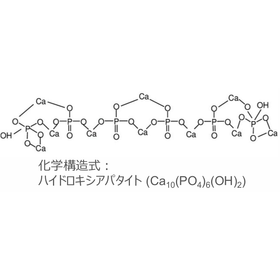
The development of rechargeable batteries employing solid electrolytes has been actively pursued as a route toward safer and more reliable energy storage systems. Among the candidate materials, inorganic electrolytes such as sulfides, as well as polymer electrolytes, have attracted significant attention due to their high lithium-ion conductivity. Beyond ionic transport performance, extensive efforts have been devoted to improving safety, durability, and long-term stability for practical all-solid-state battery applications. Nevertheless, materials that fully satisfy industrial requirements have yet to be realized. Through sustained research efforts, we have developed a new solid electrolyte material that simultaneously addresses lithium-ion conductivity and safety. This advance was achieved by introducing targeted modifications into hydroxyapatite-based materials. While conventional hydroxyapatite exhibits negligible lithium-ion conductivity, the modified material demonstrates a conductivity of approximately 1 mS/cm at room temperature. This result establishes a new pathway toward safer and higher-performance all-solid-state batteries, with promising potential for applications in the automotive and robotics industries.

  • others
  • Solid Electrolyte

Added to bookmarks

Bookmarks list

Bookmark has been removed

Bookmarks list

You can't add any more bookmarks

By registering as a member, you can increase the number of bookmarks you can save and organize them with labels.

Free membership registration

Suggestions for effectively utilizing polymers.

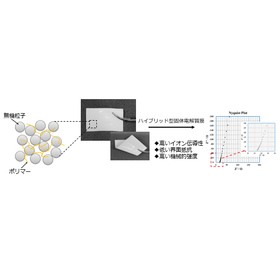
We will conduct a study on the hybridization of inorganic solid electrolytes and polymer solid electrolytes.

Our company is engaged in the development of hybrid solid electrolytes through compounding. The hybrid solid electrolytes, which combine polymers and inorganic solid electrolytes (such as sulfide and oxide types), are highly anticipated as functional materials that possess the advantages of both organic and inorganic components. By combining various polymers and inorganic solid electrolytes, we aim to develop hybrid solid electrolytes with high performance. 【Features of Hybrid Solid Electrolyte Membranes】 ■ High ionic conductivity ■ Low interfacial resistance ■ High mechanical strength *For more details, please download the PDF or feel free to contact us.

  • Company:KRI
  • Price:Other
  • Cells and batteries
  • Secondary Cells/Batteries
  • Fuel Cells
  • Solid Electrolyte

Added to bookmarks

Bookmarks list

Bookmark has been removed

Bookmarks list

You can't add any more bookmarks

By registering as a member, you can increase the number of bookmarks you can save and organize them with labels.

Free membership registration